With the Interoceanic Corridor running its final rail sections and Mexican ports handling 4 million TEUs through May, the transatlantic alliance moves from paper to real logistics operations
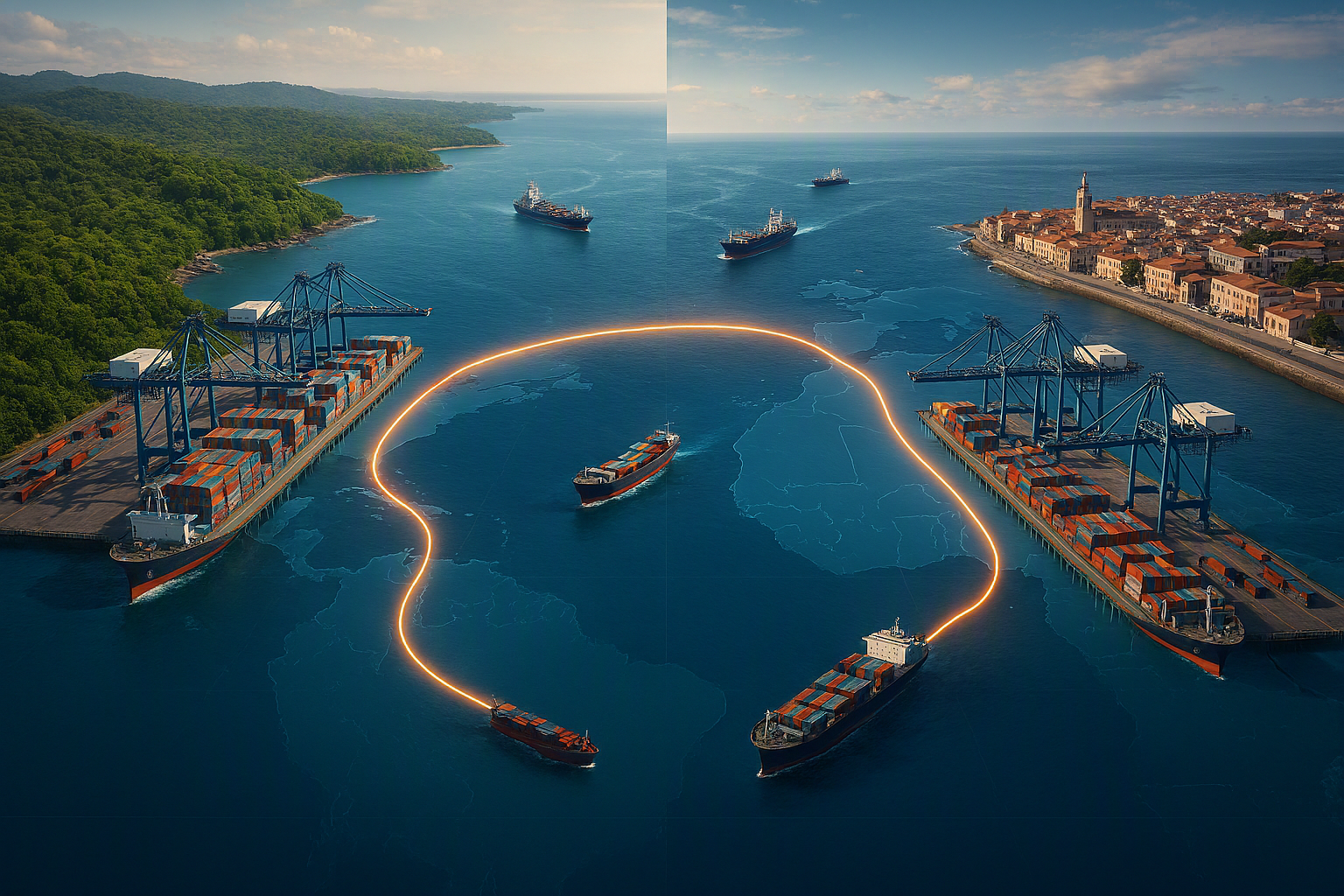
Mexican ports closed May 2026 with 4,019,931 TEUs handled, up 4.4% from the previous year. The figure not only confirms the strength of the national port system but also puts into context the moment when Mexico and Portugal are consolidating their transatlantic maritime corridor. With the Interoceanic Corridor of the Isthmus of Tehuantepec completing its rail works this June, the logistics alliance between the two countries is no longer a protocol signed on paper but operable infrastructure.
The agreement has concrete roots. In February 2026, the port authorities of Mexico and Portugal formally signed the Implementation Protocol linking the ports of Coatzacoalcos and Salina Cruz with the Port of Sines as operating partners. The protocol was signed on February 3 at the Port of Sines by retired Vice Admiral Martín Zepeda Anguiano, general director of the Coatzacoalcos National Port System Administration, and Pedro do Ó Ramos, president of the Administração dos Portos de Sines e do Algarve, establishing the bi-oceanic route as a platform for two-way transport of containerized cargo, dry bulk, liquefied natural gas and other energy products. The operating mechanism is clear: cargo enters through Coatzacoalcos from the Atlantic, crosses the Isthmus by rail and leaves through Salina Cruz toward the Pacific, connecting from there with international shipping routes to Asia, and vice versa toward Europe.
What makes this progress relevant today, beyond the bilateral agreement, is the environment around it. Opening markets and redesigning routes is no longer a bet on commercial expansion but a resilience decision, with the conflict in the Middle East and tariff pressure from the Trump administration making it urgent to have logistics alternatives outside the traditional corridors. For freight forwarders and IMMEX companies running flows to Europe or importing European inputs, the Sines–Coatzacoalcos–Salina Cruz route is exactly that: a diversification option that reduces dependence on the Panama Canal and on Mediterranean routes currently exposed to geopolitical tensions. For Mexican companies, a more structured connection with Sines can serve as a complementary gateway to Western Europe via the Iberian Peninsula, and in a volatile environment, logistics redundancy is valuable in its own right. The time to analyze this route is not when it is saturated, but now, while there is still room to position early.
Source: T21 · The Logistics World · El Financiero · Excélsior · Secretaría de Relaciones Exteriores · Data Portuaria · Transporte.mx
Published: June 29, 2026
Last updated: November 27, 2026
Slug: the-new-mexico-europe-bi-oceanic-route-now-has-a-name-and-a-port-coatzacoalcos-and-sines-move-toward-their-first-joint-shipment