
COMCE estimates cost overruns of 10% to 30% per foreign trade operation stemming from the customs reform in force since January; the new VUTCE centralizes 130 procedures from 10 agencies, but the learning curve remains steep
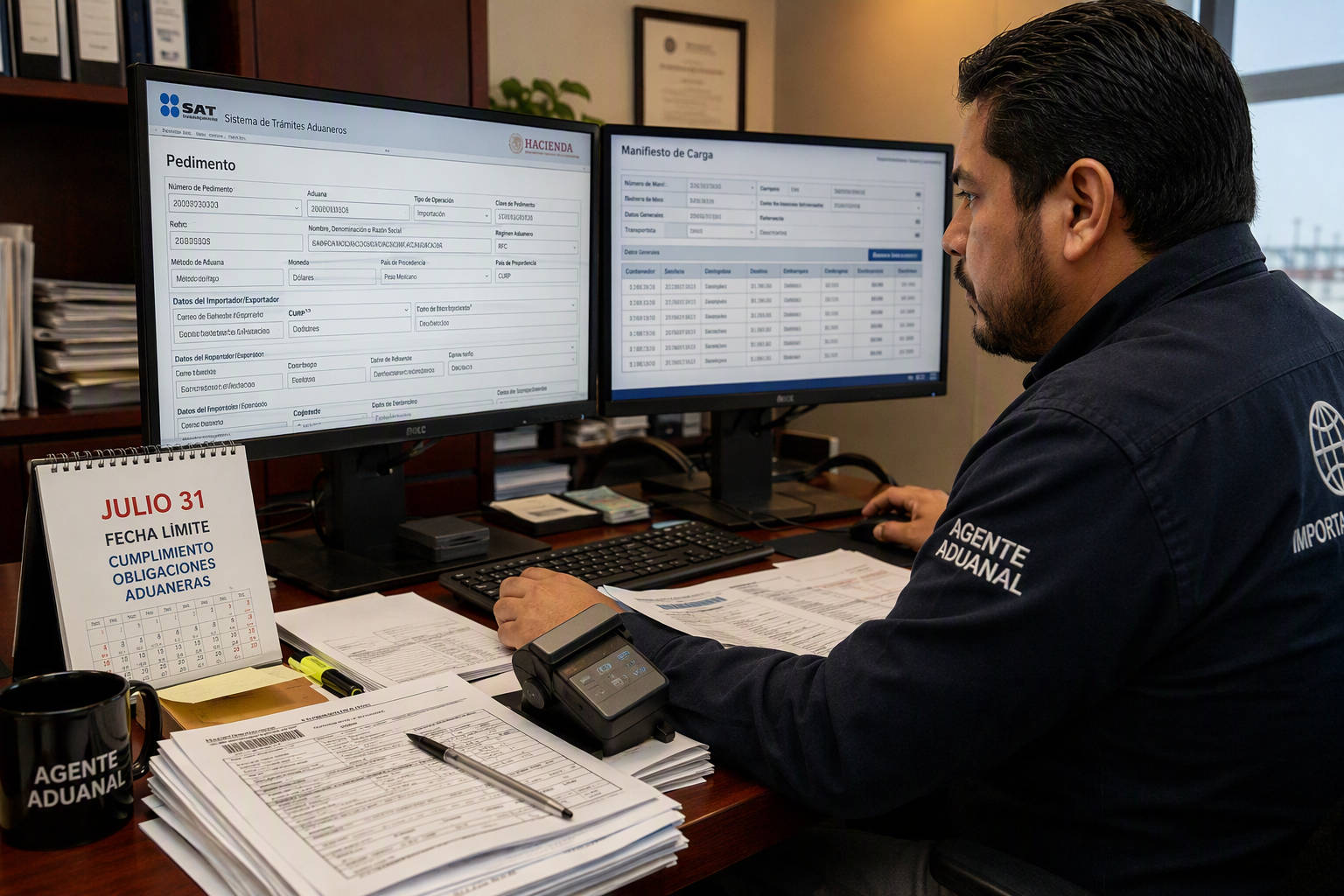
July 31 is not just another date on Mexico's foreign trade calendar. On that day the Electronic Value Declaration (Manifestación de Valor Electrónica, MVE) takes full effect — the last major piece of the deepest customs reform the country has seen in three decades — and the clock is running with only eight days to spare. The digitalization of Mexican customs and the new obligations arising from the reform to the Customs Law are raising the cost of some foreign trade operations by 10% to 30%, according to estimates by the Mexican Business Council for Foreign Trade (COMCE), due to technology investments, higher customs broker fees and delays in the release of goods. Javier Cendejas, president of COMCE in the northeast, said the impact varies by product, customs office and number of suppliers, but that compliance reviews, new controls and additional clearance times already represent a tangible, measurable extra cost for companies engaged in foreign trade in Mexico.
The regulatory ecosystem around the MVE has changed rapidly in recent months. The Single Window for Foreign Trade Procedures (VUTCE) —formalized by decree on May 4, 2026— centralizes more than 130 import and export procedures in a single digital entry point, coordinating document validation, permit authorization and consultation of non-tariff regulations from ten agencies: SAT, Secretaría de Economía, SADER, SEMARNAT, SEDENA, Salud, SENER, PROFEPA, INBA and INAH, plus two regulatory bodies. Administration of the platform moved from SAT to the new Agency for Digital Transformation and Telecommunications, and it is now the convergence point for all the digital obligations that fall on importers, exporters and customs brokers. Customs valuation is no longer an administrative annex but a digital sworn statement with direct financial and criminal implications for the importer, a fundamental change that requires a precise understanding of its scope before the deadline expires.
Despite the cost of the transition, the industry consensus on direction is clear. Yu Chen, regional operations manager at logistics services company Goodcang, said digitalization is essential to improve the transparency, traceability and competitiveness of Mexican foreign trade, acknowledging that adaptation will be costly in the short term but that in the long run Mexico needs to bring digitalization, automation and artificial intelligence into foreign trade. Companies that have not yet completed the migration of their systems must act immediately on four fronts: validate that their management system supports the XML 4.0 format required by VUTCE, update the electronic signatures of all legal representatives, integrate the required supporting documents —CFDI, commercial invoices, contracts, proof of payment, certificates of origin, insurance policies and transport documents— and train their operations team on the new digital workflows. For IMMEX companies and freight forwarders handling daily volumes of temporary imports, July 31 allows no further postponement: it will be the first day the authority audits actual compliance, and penalties for non-compliance can reach up to 22,000 pesos per pedimento, plus the recalculation of general import duties, VAT and surcharges, with customs empowered to hold the operation until the information is corrected.
SOURCES: Mascontainer, La Jornada, Punto por Punto, Infobae México, Simetría Legal, EY México, KPMG Global Trade, Comce, Goodcang, ANAM
Published: July 24, 2026
Last updated: November 27, 2026
Slug: with-eight-days-to-the-mve-deadline-digitalizing-customs-is-already-costing-companies-up-to-30-more-per-operation