With the first bilateral round of the T-MEC review scheduled for September and the regional content threshold about to rise to 70%, procurement directors and logistics operators face their most critical decision of the year
Mexico is enjoying the best export performance in its history, but beneath that record lies a structural reality that few surface-level indicators reveal: only 6% of companies established in the country are actually integrated into the value chains of global companies. The figure, which has been circulating this week in sector analyses published by supply chain firms, explains why the nearshoring boom has not yet translated into a broad transformation of Mexico's business base. The T-MEC (USMCA) reform scheduled for July 2026 will force this integration: when regional content requirements rise from 64% to 70%, manufacturers will have two options: dramatically strengthen their local supplier networks, or lose the tariff advantages that make operating in Mexico competitive. With the first bilateral round confirmed for September, the window to choose is narrowing.
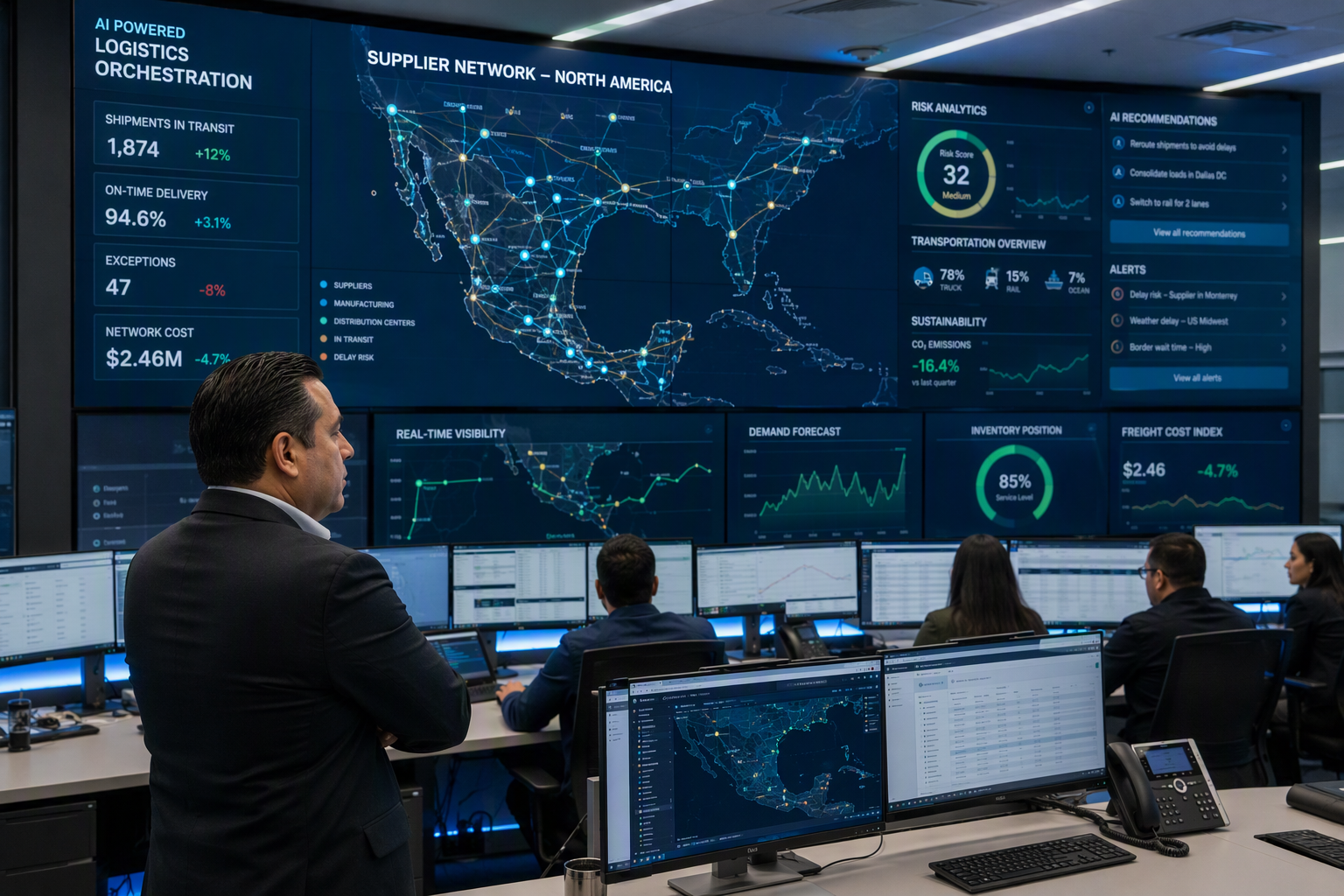
The logistics sector's response to this challenge centers on a concept T21 identified yesterday as the core of competitiveness for the second half of the year: supply chain orchestration. Unlike traditional visibility, which shows what is happening in the chain, orchestration makes it possible to act on it in real time, coordinating suppliers, carriers, warehouses and customers under an integrated, predictive logic. In 2026, supply chain platforms are evolving toward more integrated and intelligent systems, where artificial intelligence adjusts inventory policies, prioritizes exceptions and frees teams to focus on strategic decisions, making AI essential for agility and resilience in a volatile environment. For Mexican companies that currently run on fragmented systems and manual processes, this leap is not optional: it is the condition for proving the origin and traceability of their products in the audits that will come with the new T-MEC framework.
The barriers to closing that gap are well known and persistent. Although 36.7% of logistics leaders want to implement robotic process automation, only 11.7% currently have robotics and automation technologies in place, a gap of more than 20 percentage points showing that, despite digitalization, teams remain stuck in manual, repetitive tasks. Add to this the shortage of digital talent specialized in supply chain, organizational silos between procurement, logistics and foreign trade, and the lack of a long-term technology strategy in mid-sized companies. According to KPMG's analysis of supply chain trends for 2026, six factors will shape the agenda of industry leaders: the pursuit of value, integration into global business services structures, scaling artificial intelligence, the arrival of AI agents in procurement processes, the adoption of new strategic metrics, and the management of trade and tariff disruptions. For freight forwarders and foreign trade operators serving manufacturers, the message is strategic: their customers are under pressure to transform before September, and those who can support that transformation with integrated visibility, traceability and documentary compliance services will have a real competitive advantage in the most demanding market in the recent history of Mexican foreign trade.
SOURCE: T21 · Klotx Supply Chain · KPMG Colombia/México · Datup.ai · Slimstock · Instituto Adecco México · Zetes Supply Chain
Published: August 4, 2026
Last updated: November 27, 2026
Slug: only-6-in-100-mexican-companies-are-part-of-global-value-chains-the-gap-the-t-mec-forces-them-to-close-before-september