
The World Container Index tops 4,600 dollars per 40-foot container; Manzanillo faces added pressure as Shanghai–New York climbs to almost 8,000 dollars per box
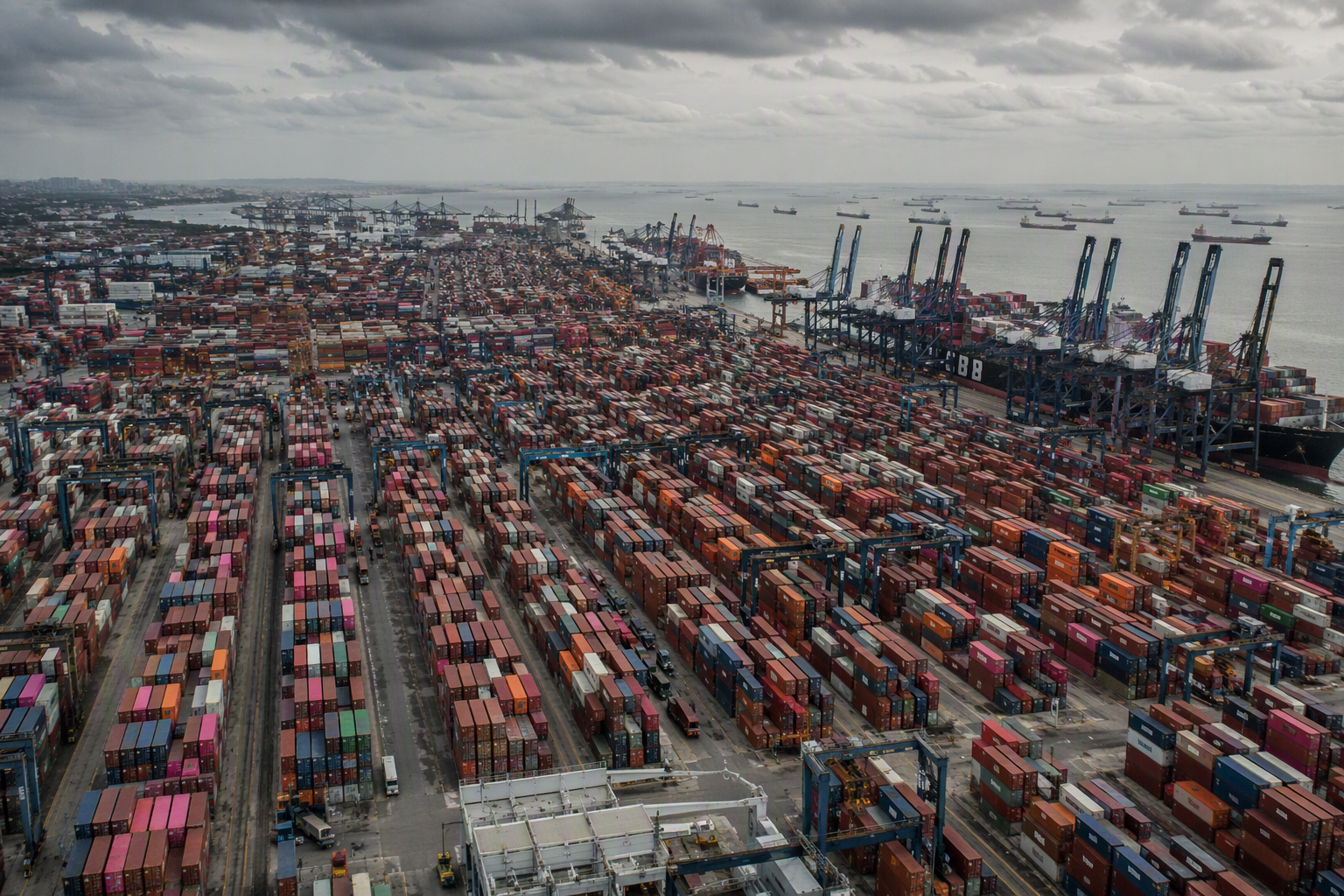
The global ocean freight market enters the second half of July at one of its tensest moments in recent years. Drewry's World Container Index reached 4,639 dollars per 40-foot container during the week of July 9, 2026, its highest level since September 2024, amid growing pressure on the main international shipping lanes. The index rose 2% week over week, driven mainly by rate increases on Asia–Europe and transpacific routes. Shanghai–New York reached 7,904 dollars per container, up 11% for the week, while Shanghai–Los Angeles stood at 6,482 dollars and Shanghai–Rotterdam at 4,933 dollars. For Mexican importers that rely on the transpacific corridor, these figures are not abstract statistics: they are the real cost they are absorbing today on every shipment leaving China.
The pressure does not come from a single front but from several factors converging at once. Sea-Intelligence analysts note that the peak season has moved significantly earlier in recent years, and the 2026 peak could run from mid-May to mid-August, or even into September. On top of that, the European emissions trading system takes effect on July 1, doubling carbon surcharges on shipping to Europe and structurally raising costs. The main carriers responded with aggressive surcharges: Maersk, CMA CGM, Hapag-Lloyd, MSC, COSCO and HMM activated peak season surcharges, general rate increases and bunker surcharges on the main corridors to Europe, North America and Latin America. For Mexico, the combination of an extended peak season, geopolitical disruptions in the Middle East and stacked surcharges from every carrier is creating an environment where importing is not only more expensive but less predictable from week to week.
The impact on Mexican ports is already tangible, and it comes with a specific warning for Manzanillo. The port is receiving more vessels from Asia during July and, as a result, congestion will build in the yards used for unloading and handling containers, which will become a critical issue. Space shortages also complicate planning: if a shipper books 100 containers, a carrier may offer space for only 20, and the other 80 have to be placed with another carrier, raising freight costs and upsetting importers' and exporters' budgets. Given Manzanillo's saturation, shippers should consider alternative ports such as Lázaro Cárdenas or Altamira as operational relief valves. For freight forwarders and IMMEX companies managing volumes from Asia, the market's message this week is clear: anyone who does not have their August shipments confirmed today will face even higher rates, less space availability and less predictable transit times in the coming weeks.
SOURCES: TLC Magazine México · Drewry Supply Chain Advisors · R.H. Shipping · Roldan Logistics · Mascontainer · ITS Logistics · Sea-Intelligence
Published: July 15, 2026
Last updated: November 27, 2026
Slug: ocean-freight-rates-hit-a-10-month-high-and-global-port-congestion-reaches-a-four-year-peak-the-direct-impact-on-mexico