
The measure, published in the Diario Oficial de la Federación, amends more than 1,400 tariff lines and seeks to level the playing field for domestic manufacturing against imports from countries without trade agreements.
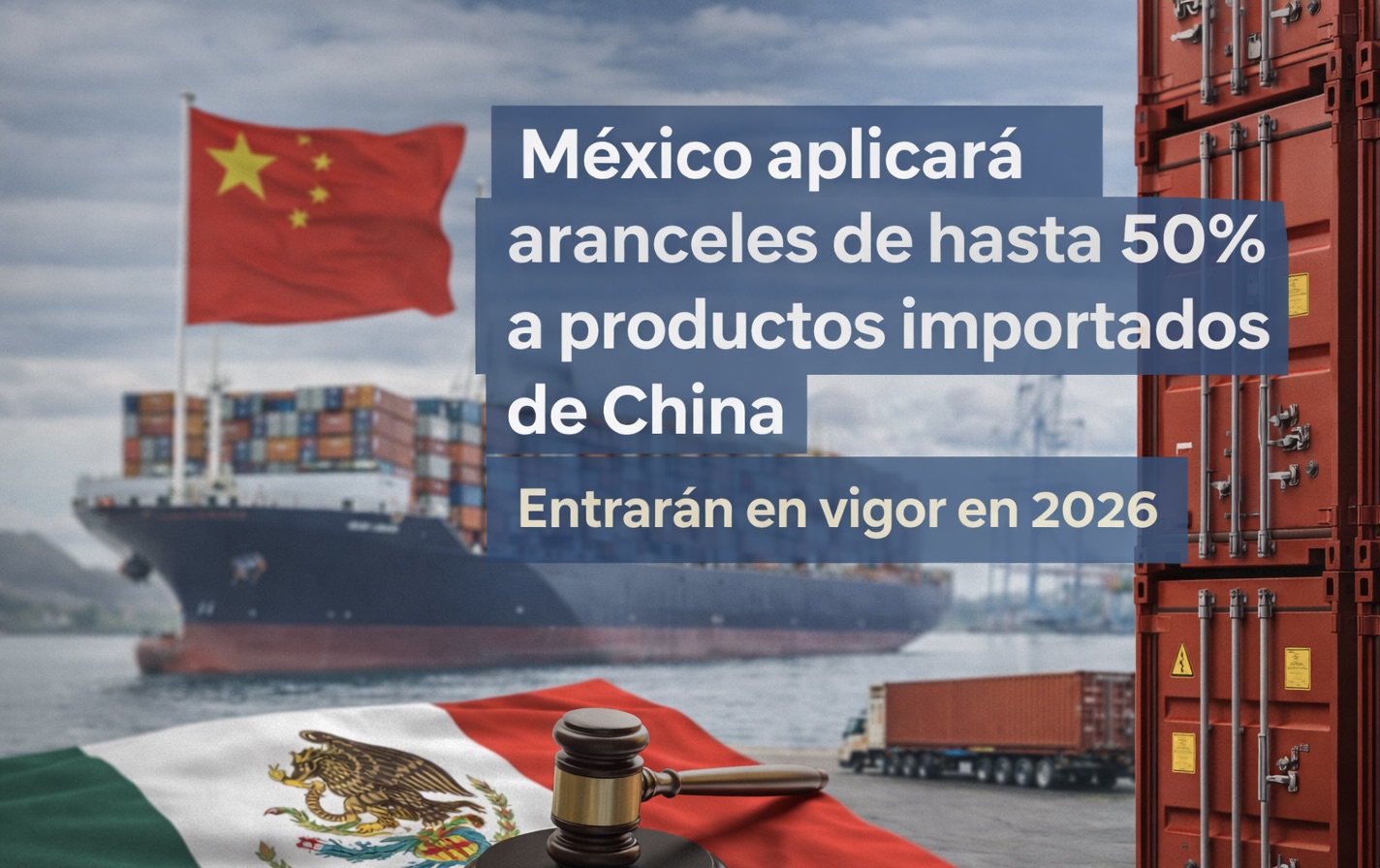
Starting January 1, 2026, the Mexican government will apply new tariffs of between 5% and 50% on products imported from countries with which it has no free trade agreement, including China, South Korea, India, Indonesia and other major markets. The measure was made official through a decree published in the Diario Oficial de la Federación (DOF) that updates various tariff lines of the Ley de los Impuestos Generales de Importación y Exportación (General Import and Export Tax Law).
The reform affects 1,463 tariff lines, with rates that vary by product type and sector. The highest tariffs, up to 50%, will apply to sectors such as automobiles and auto parts, while other consumer goods, industrial materials and intermediate goods will face mid-range rates (5%-35% or more).
Goods facing new duties include everyday and industrial products such as:
The Mexican government has justified the measure as a way to protect domestic production, especially in industries that have faced competitive pressure from low-cost imports. According to lawmakers, the reform seeks to correct trade distortions, curb unfair practices and promote more balanced competition for domestic industry.
Mexico's President, Claudia Sheinbaum, has said the new tariffs "are not aimed at China," but at countries with which Mexico has no trade agreements that grant preferential tariff treatment. The stated goal is to strengthen national industrialization and support key productive sectors.
Higher tariffs on products imported from China and other economies without trade agreements may have significant effects on international supply chains:
From a logistics perspective, these tariff changes underline the importance of customs planning, integrated cost analysis and alternative supply options, as well as strategies that optimize foreign trade and import routes.
These tariffs take effect amid global trade tensions and Mexico's growing focus on protecting its domestic industry and attracting nearshoring-related investment. This brings both challenges and opportunities for logistics providers, freight forwarders and importers, who will need to adjust their business models to stay competitive.
Published: December 30, 2025
Last updated: November 27, 2026
Slug: mexico-to-apply-tariffs-of-up-to-50-on-imports-from-china-starting-in-2026